
PyTorch and NVIDIA Bring Fast Robot AI to Low-Power Hardware
ExecuTorch 1.6 and Torch-TensorRT 2.15 allow complex PyTorch robotics models to run directly on compact NVIDIA hardware with minimal memory usage.

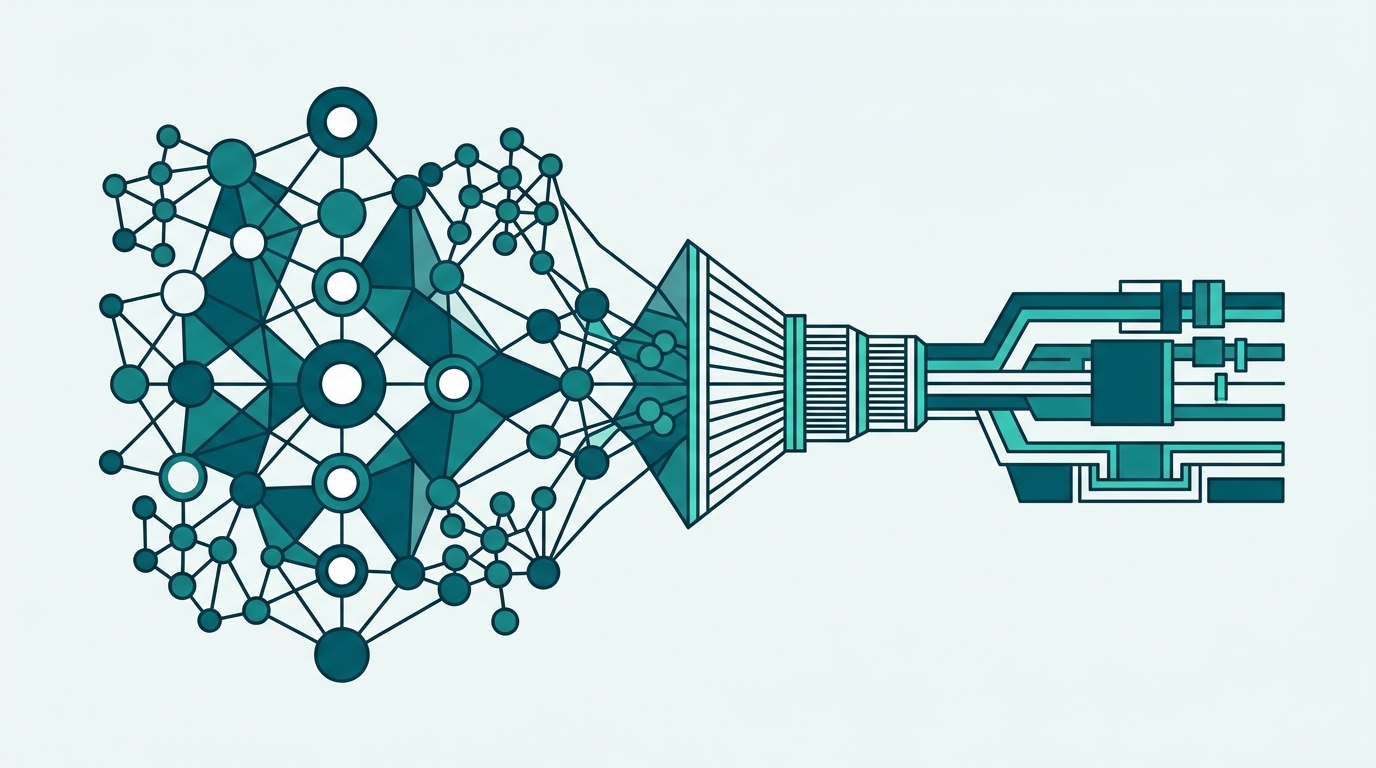
✓ Verified · Official source
In 30 seconds
- PyTorch introduced an integration between ExecuTorch 1.6 and NVIDIA Torch-TensorRT 2.15 designed for robotics deployment.
- The update allows complex robot policies to run directly on compact chips like NVIDIA Jetson Orin Nano without loading full PyTorch.
- It enables real-time physical decision-making on low-power devices with strict memory and power constraints.
Deploying artificial intelligence on physical robots requires fast, predictable decisions without relying on distant cloud servers. PyTorch has integrated its ExecuTorch runtime with NVIDIA TensorRT to bridge the gap between high-level AI model training and edge hardware deployment.
Developers can now train a robotic policy in PyTorch, compile it with TensorRT, and execute it on compact microchips using minimal memory and processing overhead.
High Performance on Compact Hardware
Robotic systems rely on action chunks, which are short sequences of physical movements calculated in real time. If calculations stall, the robot halts its physical operation. The new ExecuTorch-TensorRT integration allows large models, such as the 3-billion-parameter GR00T policy, to fit on an 8 GB NVIDIA Jetson Orin Nano board where standard PyTorch previously ran out of memory.
By removing the need to load the heavy PyTorch library on the target device, the system achieves execution speeds within four percent of native TensorRT builds. Any mathematical operations not natively supported by TensorRT automatically fallback to GPU processing without interrupting execution.
Simplified Deployment for Hardware Developers
Previously, converting PyTorch code into hardware-optimized instructions required complex intermediate converters or manual layer rewriting. This update streamlines compilation into a single command tool, allowing developers to maintain their codebase entirely within PyTorch.
The lighter footprint means autonomous devices can process camera inputs and execute physical actions locally with lower latency and reduced battery consumption.
How does this affect your everyday life?Takeaway
For everyday consumers, this technical milestone paves the way for smarter, more responsive physical devices—such as household helper robots, delivery drones, and automated tools—that react safely in real time without needing an active internet connection.
✓ Verified sources for this story
- 🟢 Official source: PyTorch Blog — ExecuTorch-TensorRT: PyTorch Robot Policies at NVIDIA TensorRT Speed